
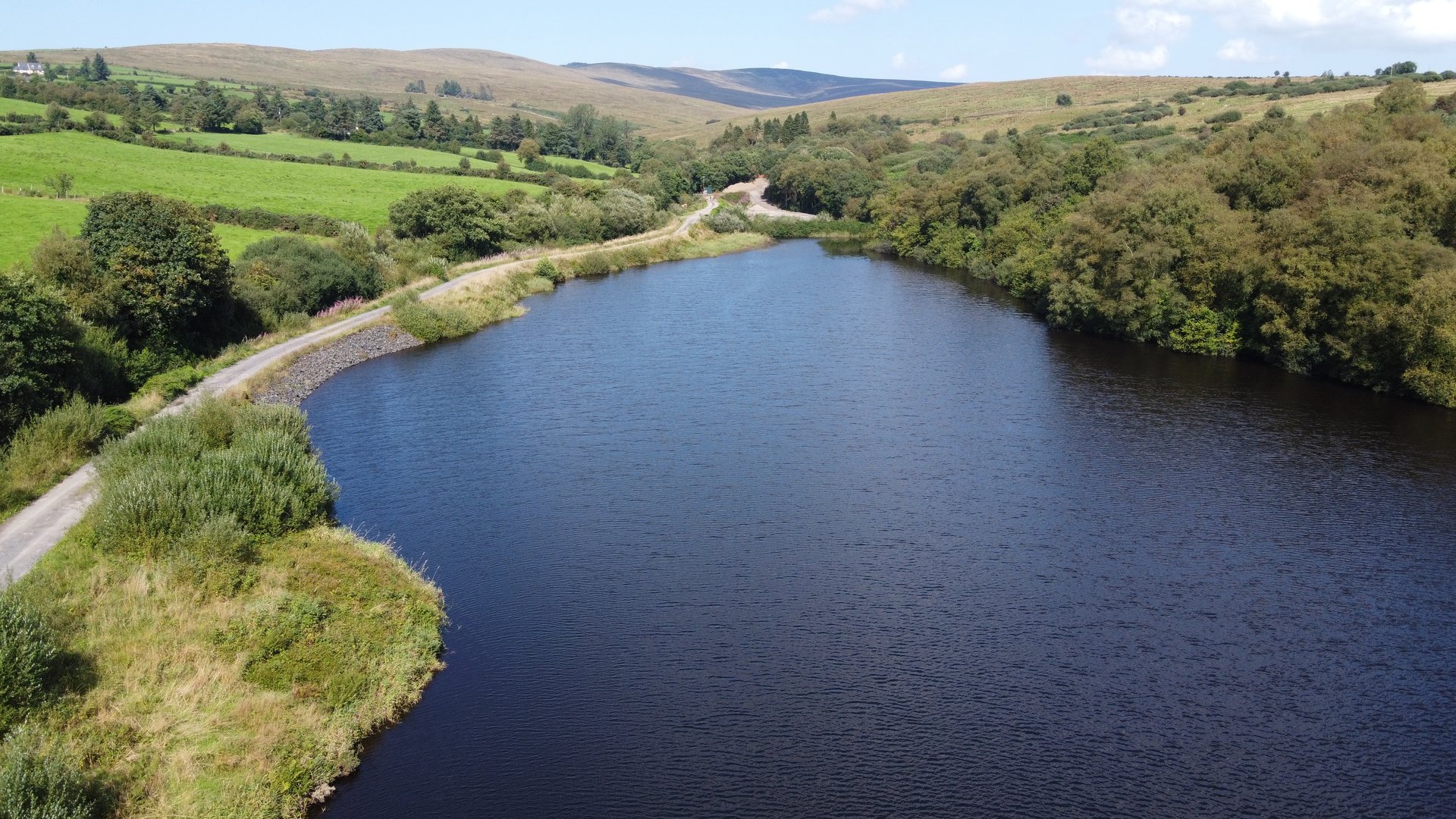
Protecting Shared Waters is delivering practical actions to improve water quality, water quantity and catchment resilience across shared catchments. Through agronomic support to farmers, the piloting of nature-based solutions and community engagement, the project is generating evidence and solutions that can be applied more widely across the region.
Our Objectives:
Working together the cross-border team will jointly develop a solution to manage and improve water quality/quantity pressures to help meet Water Framework Directive requirements in sub-catchments of the Strule and Fane catchments, the learning from which can be applied to other organisations and catchments in the future.
We will develop catchment solutions that will:
- develop a decision-making process applicable for NI/border counties ensuring that the right NbS are implemented in the right places
- implement a series of pilots for Nature based Solutions (NbS) on agricultural land in the Camowen catchment of the Strule
- deliver bespoke agronomic advisory support to farms in a Camowen sub-catchment maximising the benefits of the Soil Nutrient Health Scheme and helping to reduce the phosphorus (P) source pressure
- restore peatland (Murrins ASSI, Glenhordial, Glencurry catchments) thus improving designated sites through implementation of necessary conservation measures
- develop peatland restoration plans and undertake landowner engagement for two sites, which can be restored when further funding becomes available
- undertake multi-sectoral engagement work with communities, farmers and industry to address water quality/quantity issues in a selected sub-catchment of the Fane including promoting water conservation
- install water conservation demonstration measures, e.g., rainwater harvesting in the Fane catchment
How We Are Delivering Our Objectives
Agronomy and Nutrient Management in the Strule
We will work with farmers to improve nutrient management and address sources of phosphorus within a sub-catchment of the Strule.
Phosphorus (P) is an essential nutrient for agricultural production, underpinning crop and grassland productivity. Maintaining nutrients at agronomically optimum levels is critical to supporting efficient food production, sustaining soil fertility, and maximising nutrient use efficiency.
However, nutrient surpluses can increase the risk of losses to water through surface runoff, erosion and subsurface pathways. In freshwater systems, phosphorus is widely recognised as a key driver of eutrophication, contributing to excessive algal growth, ecological degradation, and deterioration in water quality.
Recent AFBI research has shown strong links between catchments with high soil Olsen P surpluses and in-stream P levels in those rivers. It has also shown that agri-environmental scheme measures which focus solely on runoff pathway interception, while reducing levels of particulate P and sediment, have no material effect on losses of soluble P. For this reason, source control through improved nutrient management in conjunction with nature-based solutions to reduce storm event losses, is central to achieving both agricultural and environmental objectives.
Through agronomy and nutrient management, we will support farmers in the Camowen catchment to optimise nutrient management and improve nutrient use efficiency.
Using soil test results as the foundation for nutrient planning, farmers will receive tailored agronomic advice to help match nutrient applications to crop and grassland requirements.
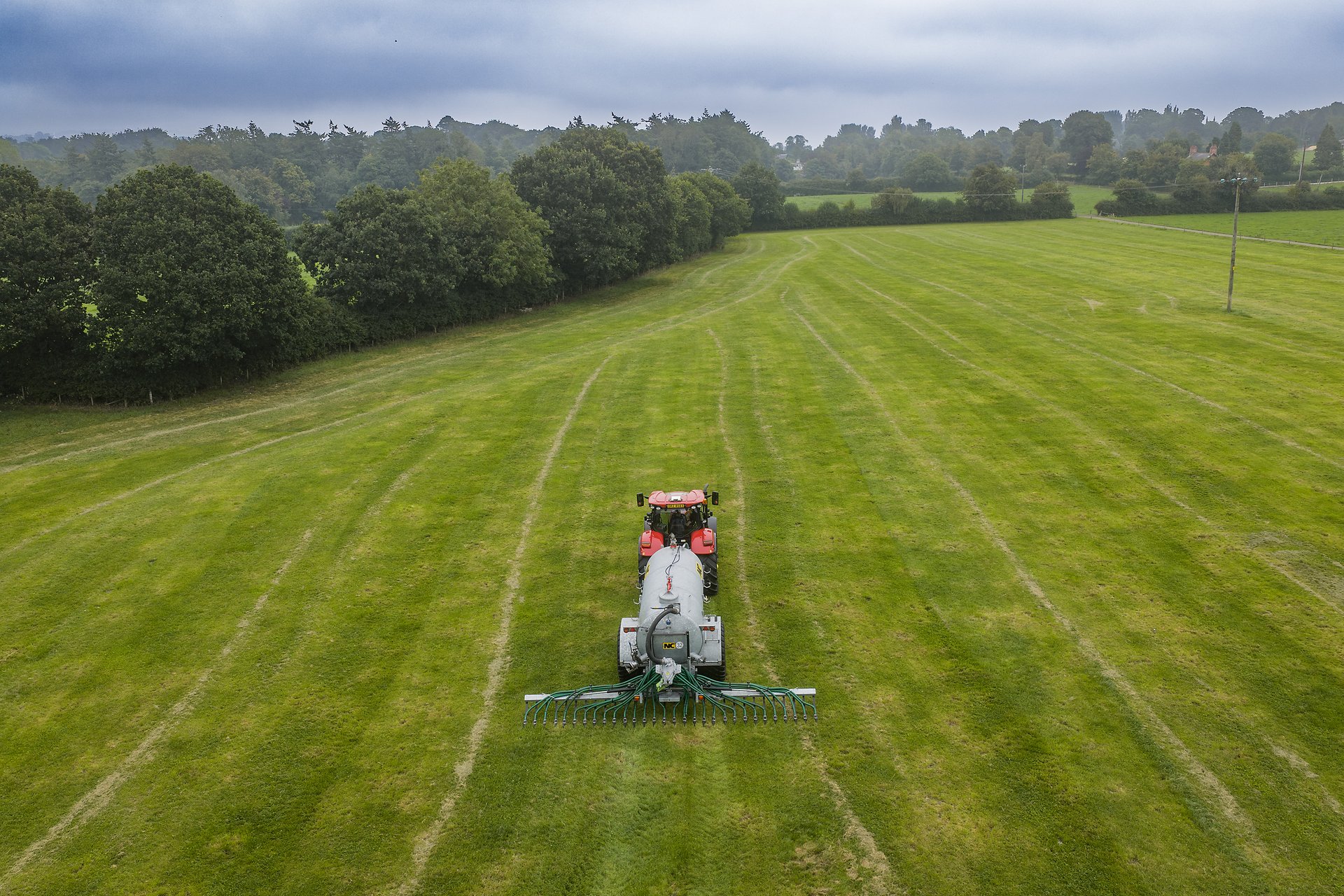
The project will provide guidance on nutrient management planning, promote best practice in nutrient stewardship, and demonstrate how precision nutrient application technologies can improve the accuracy and effectiveness of fertiliser and organic manure applications. By improving nutrient use efficiency and nutrient targeting, the project aims to reduce diffuse nutrient pollution pressures, support the achievement of water quality objectives, and generate evidence to inform the wider adoption of sustainable nutrient management practices across Northern Ireland's agricultural sector.
Piloting Nature-based Solutions
Nature-based solutions (NbS) use natural features to help manage water across the landscape. They can help address floods, droughts and water quality by slowing, storing and filtering water within the landscape. They can reduce the movement of sediment and nutrients into watercourses, while also helping to lower the speed and volume of runoff during heavy rainfall events.
In addition to these water benefits, NbS can provide wider benefits for biodiversity, habitats, soils and the resilience of catchments to climate change.
We are piloting a range of these solutions in the Strule and Fane to build empirical evidence on their effectiveness and suitability in different catchment settings.
The pilots include established approaches, such as woodland planting, peatland restoration and riparian buffers, alongside more novel measures, including 3D buffers and sediment traps.
These measures are being tested for their potential to slow and temporarily store runoff, reduce sediment and nutrient losses, and intercept water before it reaches watercourses, helping to improve water quality and manage floods and droughts.
However, there is no single measure that is suitable for every location. The effectiveness of an NbS depends on understanding how water moves through the landscape and where runoff, sediment and nutrients are most likely to enter watercourses.
The project will investigate how different NbS can be targeted and optimised across catchments, including where established measures are most effective and where more novel approaches may be needed to address challenging water quality pressures. They will also explore how a series of interventions (treatment train) can work together to address specific runoff pathways and catchment pressures. Some measures are better suited to slowing and filtering runoff from fields and hillslopes, while others can be used to intercept concentrated flows in ditches or streams. The jointly developed approach therefore focuses on putting the right measure in the right place, helping to identify where interventions can deliver the greatest environmental benefit while making effective use of land within working landscapes.
The evidence generated through the NbS pilots, together with learning from engagement with communities and land managers, will help build a stronger evidence base for the wider adoption of NbS.
For policy makers, water professionals and scientists, this will provide practical insight into the effectiveness, suitability and implementation of different approaches, supporting more informed decisions about where and how NbS can contribute to water quality, water quantity and catchment resilience. The learning will contribute to a practical NbS implementation blueprint, helping to guide future investment and delivery, and support the wider use of effective nature-based solutions to protect water resources.
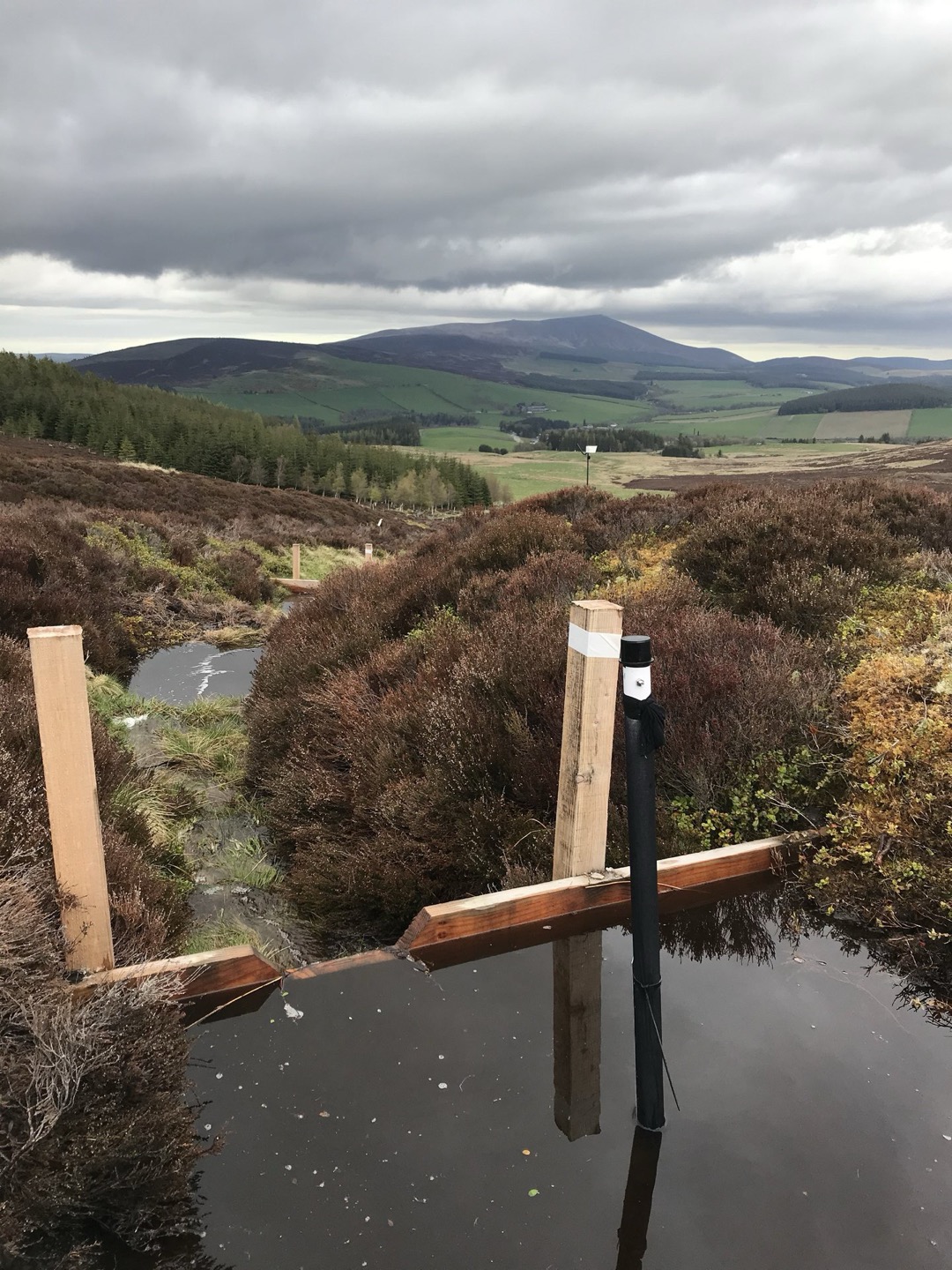
Reducing Sediment Inputs to Glenhordial Water Treatment Works
Watch how nature-based solutions, sediment traps, and catchment management measures are being piloted at Glenhordial WTW in the Strule catchment to protect raw water quality and improve catchment resilience.
Nature-Based Solutions Technical Fact Sheets & Outputs
Explore technical guidance and findings detailing practical catchment interventions piloted through the project:
Community-Led Outcomes in the Fane
We are partnering directly with participants from the local community to support practical, long-term improvements to water quality and quantity in the Fane catchment.
This approach creates an active network of farmers, businesses, and residents working together to protect local water resources. By combining scientific data with local knowledge, the project fosters a shared sense of responsibility, leading to lasting habits that protect the catchment.
To support this ‘grassroots up’ approach, we have developed a range of education materials and resources that will be available for others to use in the future when working with communities. In addition, we will install demonstration water conservation measures and demonstration nature-based solutions on a range of sites including a farm. Knowledge transfer visits will be carried out to understand the impacts and benefits of these measures, and they will continue to inform and guide local water stewardship for years to come.
The core result of this engagement is a series of community-designed, professionally installed Nature-based Solutions (NbS) which have been proposed by the ECO Programme participants and that provide immediate environmental benefits. These will result in measurable progress in water conservation and localized habitat restoration.
This initiative offers a clear, proven model for community-led water management that can be adapted for other at-risk water bodies. By tracking clear metrics on water savings and biodiversity before and after installation, the project provides reliable data to support future planning and environmental funding. Ultimately, the lessons learned and shared across catchments will ensure a lasting legacy of cooperative, practical environmental care.
Beyond The Project
A key legacy of Protecting Shared Waters will be the knowledge, evidence and practical learning generated throughout the project. By bringing together research, pilot results, technical guidance and community engagement experience, the project will provide valuable resources to support future catchment management across the region and support the wider adoption of transferable catchment management solutions.
The project aims to help inform policy development, support decision-making by water professionals, and contribute to the wider understanding of effective approaches to improving water quality, water quantity and catchment resilience.
To ensure this learning remains accessible beyond the lifetime of the project, the Protecting Shared Waters website will continue to host a dedicated legacy section until 2034. This resource will provide access to project outputs, including research reports, technical publications, guidance documents, case studies and other materials developed throughout the project, creating a lasting knowledge base for policy makers, water professionals, researchers and communities interested in catchment management.