

Fact sheets and leaflets open as PDFs in a new tab, where you can read or save a copy.
Explore a growing library of resources developed through the Protecting Shared Waters project. This section brings together fact sheets, guidance documents, reports, case studies and other materials designed to share knowledge, showcase project learning and support the wider adoption of effective approaches to water protection and catchment management.
Nature-based Solutions
10 technical overview fact sheets covering runoff management, leaky barriers, wetland buffers, sediment traps and natural water retention.
Research Papers & Reports
Case Studies & Demonstrations
ECO Programme Modules
Best Practice Videos
ECO Programme leaflets
Discover the free 14-week Educational Community Outreach Programme in the Fane catchment, running from September to December 2026.
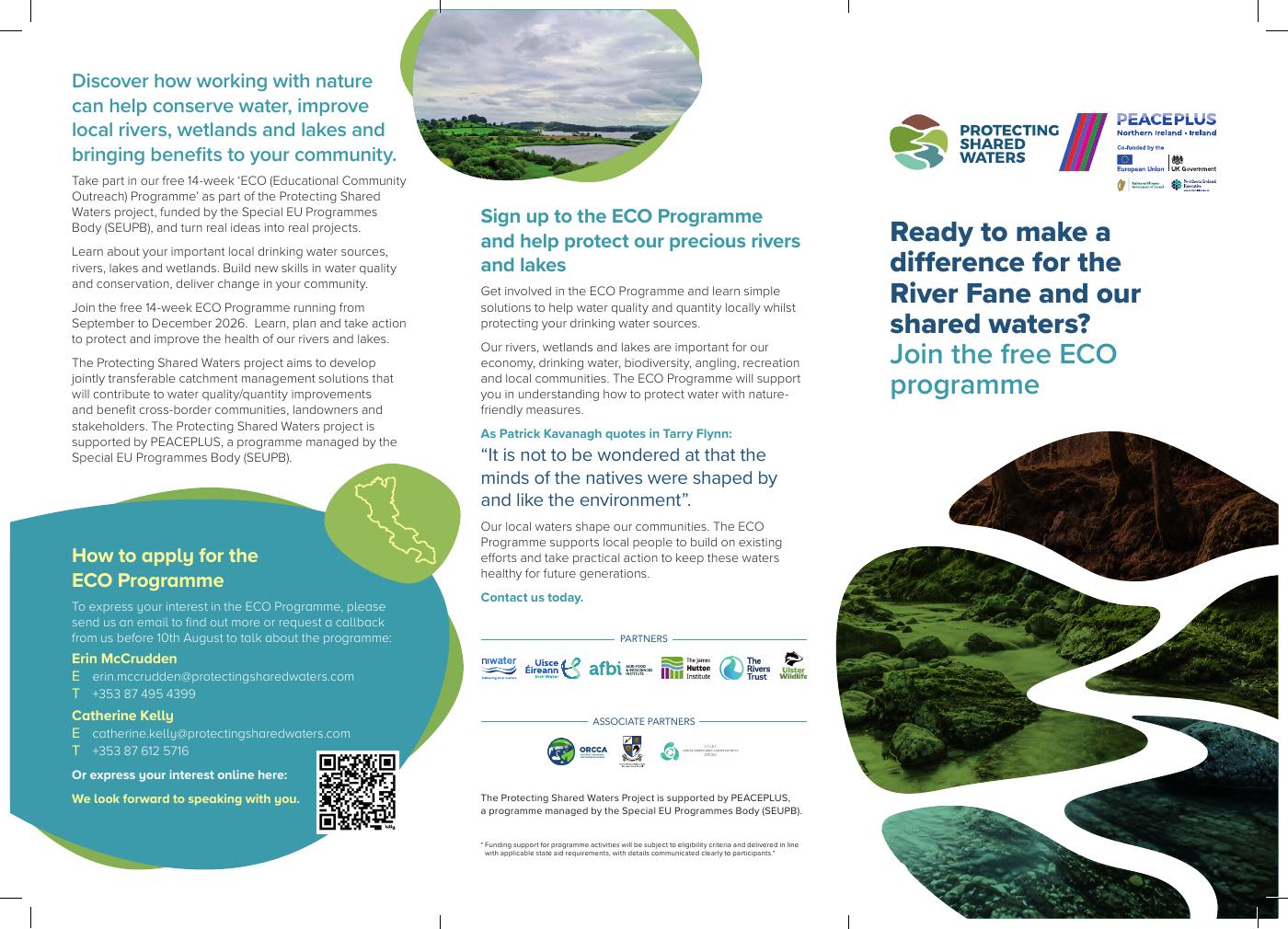
Express interest in the ECO Programme
The supplied leaflets include an earlier application deadline. For current availability, please contact the Fane Project Officers.
Nature-based Solutions
Technical Fact Sheets
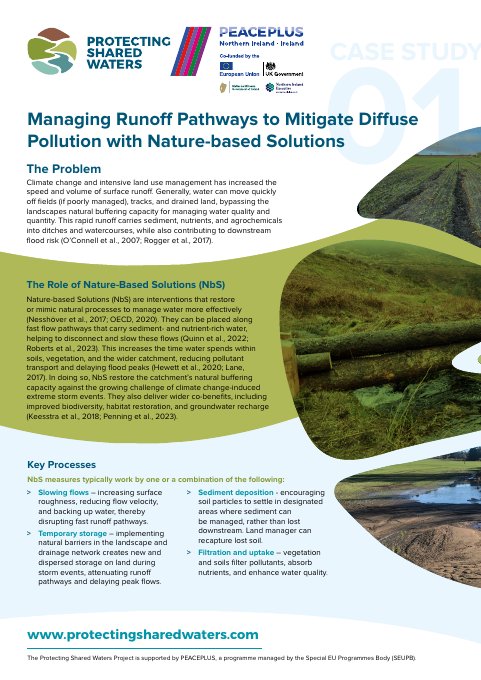
01 / Managing Runoff Pathways to Mitigate Diffuse Pollution with Nature-based Solutions
The following overview sheets describe a range of NbS measures, their primary functions, and considerations for design, siting, and maintenance.
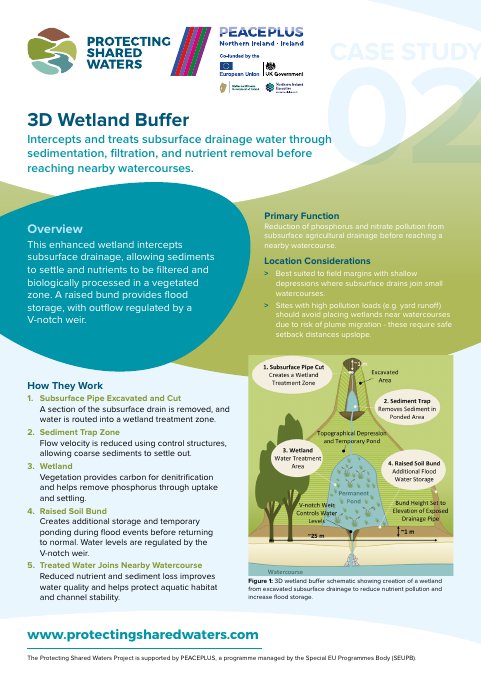
02 / 3D Wetland Buffer
Intercepts and treats subsurface drainage water through sedimentation, filtration, and nutrient removal before reaching nearby watercourses.

03 / Open-Ditch Multistage Treatment Zone
A treatment zone for high-risk nutrient runoff – slows, settles, and filters using natural materials.
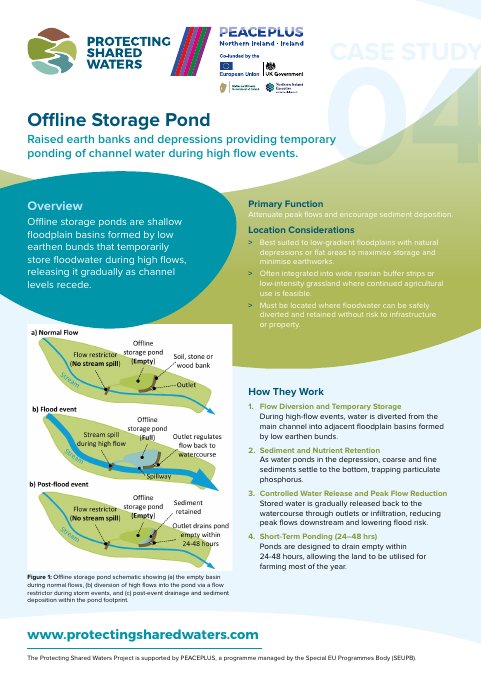
04 / Offline Storage Pond
Raised earth banks and depressions providing temporary ponding of channel water during high flow events.
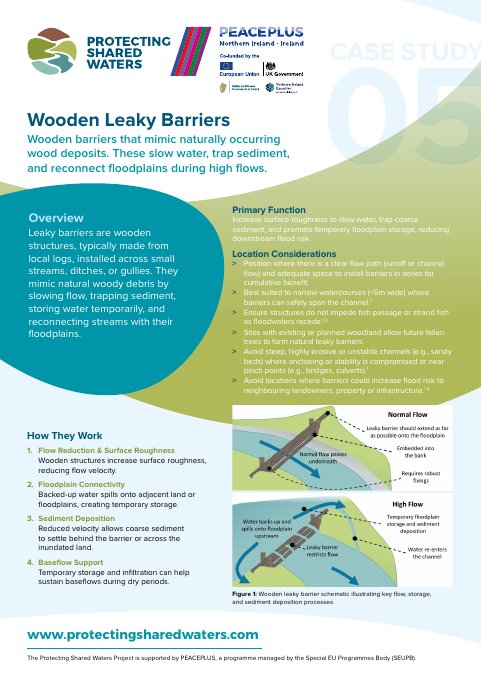
05 / Wooden Leaky Barriers
Wooden barriers that mimic naturally occurring wood deposits. These slow water, trap sediment, and reconnect floodplains during high flows.
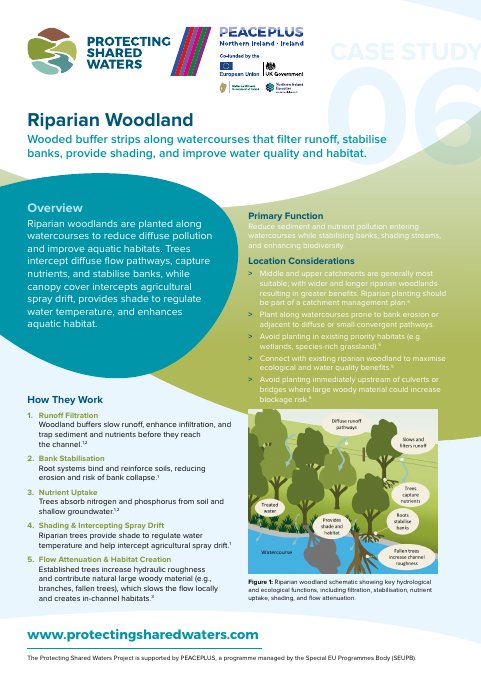
06 / Riparian Woodland
Wooded buffer strips along watercourses that filter runoff, stabilise banks, provide shading, and improve water quality and habitat.
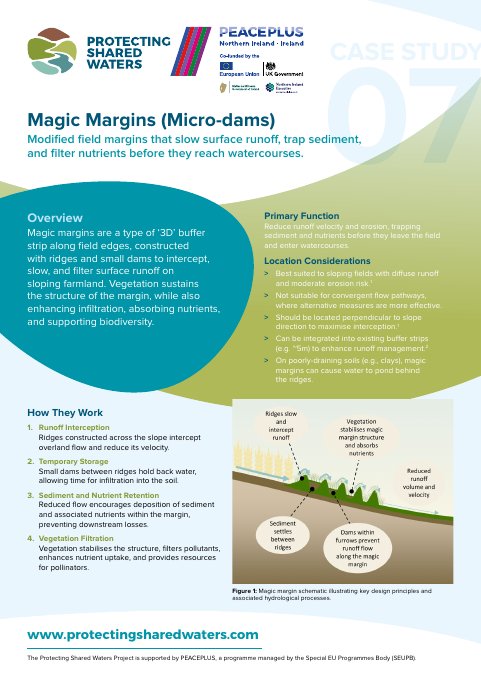
07 / Magic Margins (Micro-dams)
Modified field margins that slow surface runoff, trap sediment, and filter nutrients before they reach watercourses.
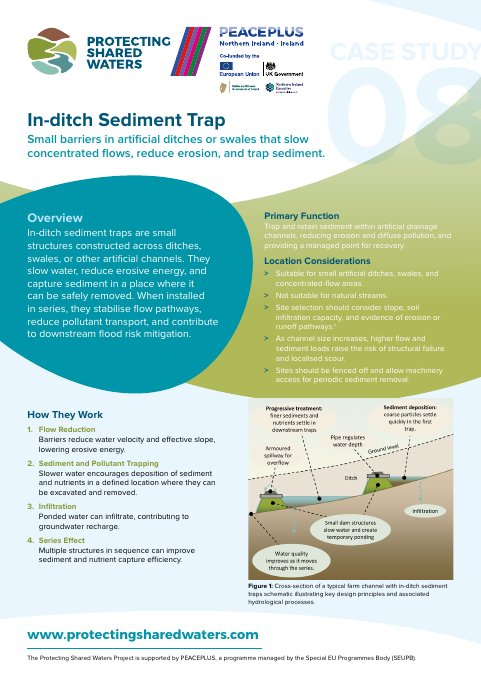
08 / In-ditch Sediment Trap
Small barriers in artificial ditches or swales that slow concentrated flows, reduce erosion, and trap sediment.
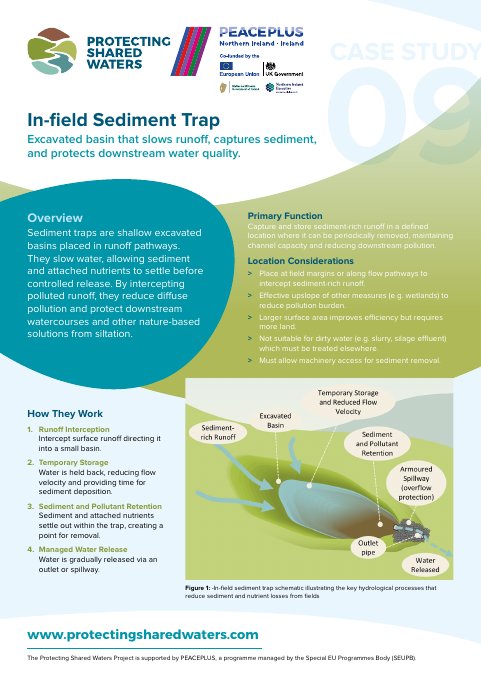
09 / In-field Sediment Trap
Excavated basin that slows runoff, captures sediment, and protects downstream water quality.
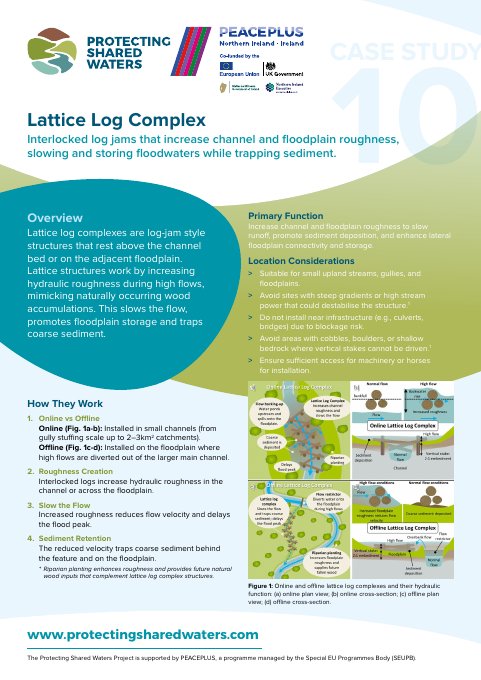
10 / Lattice Log Complex
Interlocked log jams that increase channel and floodplain roughness, slowing and storing floodwaters while trapping sediment.